
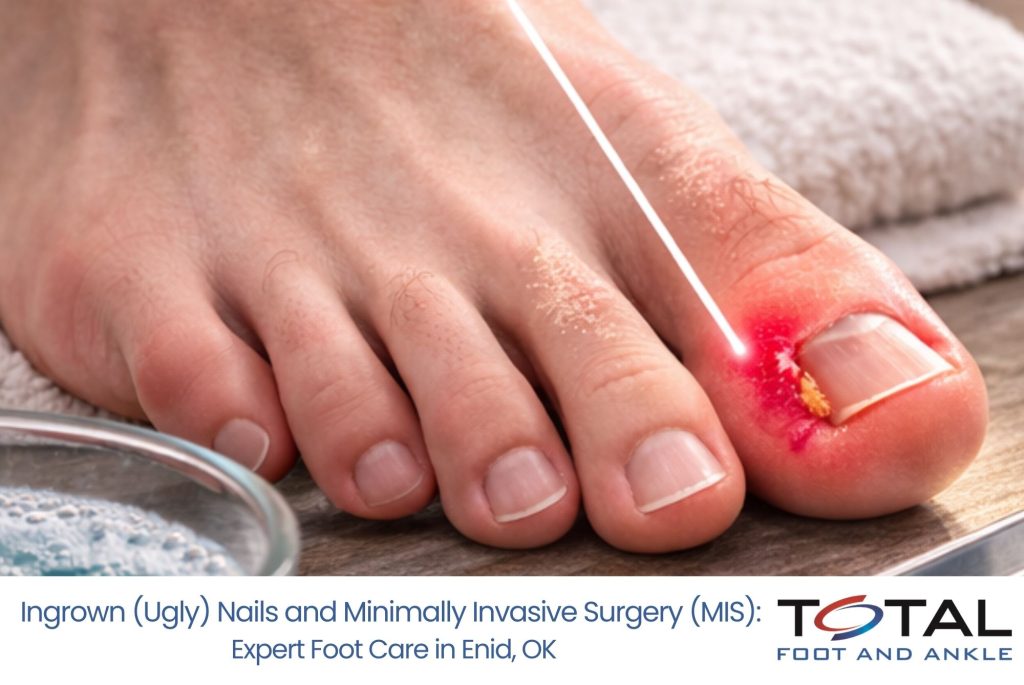
Foot pain can disrupt your daily life, limit mobility, and affect your overall well-being. One of the most common and painful foot conditions patients experience is ingrown toenails—sometimes referred to as “ugly nails.” In this context, ugly nails refer to nails that are discolored or thick and deformed, which may occur due to trauma, fungal infection, or chronic nail problems.
When left untreated, ingrown nails can lead to infection, chronic discomfort, and recurring complications.
At Total Foot and Ankle in Enid, OK, our team specializes in diagnosing and treating ingrown toenails using advanced techniques, including Minimally Invasive Surgery (MIS). Our goal is to relieve pain quickly, minimize downtime, and restore healthy function with the most effective and comfortable treatment options available.
What Are Ingrown (Ugly) Nails?
An ingrown toenail occurs when the edge or corner of a toenail grows into the surrounding skin. This most commonly affects the big toe but can occur on any toe.
Some patients also experience ugly nails, meaning nails that appear discolored or thick and deformed, which can increase the risk of ingrown nails and discomfort.
Common Causes:
- Improper nail trimming (cutting too short or rounded)
- Tight or ill-fitting shoes
- Injury or trauma to the toe
- Genetics (naturally curved nails)
- Thickened or fungal toenails
- Repetitive pressure from sports or activity
Symptoms May Include:
- Redness and swelling
- Pain along one or both sides of the nail
- Tenderness when pressure is applied
- Drainage or pus (if infected)
- Skin growing over the nail edge
If untreated, an ingrown nail can become infected and may worsen—especially in patients with diabetes or circulation problems.
Conservative Treatment Options
Many ingrown nails can be managed without surgery, especially when treated early.
OnyFix Nail Correction System
One conservative option is OnyFix, a specialized nail correction system that can help straighten the nail as it grows.
OnyFix can be used in many cases to avoid permanent removal of part of the nail. It consists of a band of composite material that is applied to the nail surface. Over time, this band gradually helps straighten the nail and reduce pressure on the surrounding skin, allowing the nail to grow in a healthier direction.
Benefits of OnyFix include:
- Non-surgical treatment option
- Painless application
- Gradual correction of nail shape
- Reduced risk of recurring ingrown nails
Your podiatrist will determine whether OnyFix is an appropriate treatment for your condition.
When Is Surgery Necessary?
Many mild cases can be treated conservatively. However, surgery may be recommended if:
- The nail continues to grow back improperly
- There is chronic or recurrent infection
- Conservative treatments have failed
- The pain is persistent or worsening
- There is significant inflammation or drainage
This is where Minimally Invasive Surgery (MIS) offers an advanced solution.
What Is Minimally Invasive Surgery (MIS) for Ingrown Nails?
Minimally Invasive Surgery (MIS) is a modern technique designed to treat ingrown toenails with smaller incisions, minimal tissue disruption, and faster recovery times compared to traditional surgical methods.
Benefits of MIS:
- Smaller incision
- Reduced swelling
- Less post-procedure discomfort
- Faster healing
- Minimal scarring
- Lower risk of complications
During the procedure, the problematic portion of the nail is carefully removed. In many cases, a specialized solution is applied to prevent that section of the nail from regrowing improperly.
The procedure is typically performed in-office under local anesthesia and usually takes less than 30 minutes.
What to Expect After MIS for Ingrown Toenails
Recovery is generally straightforward:
- Mild soreness for a few days
- Light bandaging
- Ability to walk shortly after the procedure
- Return to normal activities within a few days
- Complete healing within several weeks
Your provider at Total Foot and Ankle will provide personalized aftercare instructions to promote proper healing and prevent recurrence.
Comprehensive Q&A Section
Q: Are ingrown toenails dangerous?
A: While not usually dangerous in healthy individuals, they can become serious if infected. For patients with diabetes or poor circulation, prompt treatment is especially important to prevent complications.
Q: Can I treat an ingrown toenail at home?
A: Mild cases may improve with warm saltwater soaks and proper trimming. However, if you experience increasing pain, swelling, or signs of infection, professional treatment is recommended.
Q: What is OnyFix and how does it help?
A: OnyFix is a conservative nail correction system that uses a small band of material placed on the nail surface to gradually straighten the nail as it grows. This treatment can help relieve pressure and may prevent the need for permanent nail removal in some cases.
Q: Does minimally invasive surgery hurt?
A: The procedure is performed under local anesthesia, so you should not feel pain during treatment. Mild discomfort afterward is normal and manageable.
Q: How long does the MIS procedure take?
A: Most procedures take about 20–30 minutes and are completed in the office.
Q: Will the nail grow back?
A: If a permanent procedure is performed, the problematic edge of the nail is prevented from regrowing. The remaining nail grows normally.
Q: How soon can I return to work?
A: Many patients return to normal daily activities within 24–48 hours, depending on their job duties.
Q: Is MIS better than traditional nail surgery?
A: MIS offers several advantages, including less tissue trauma, smaller incisions, quicker recovery, and excellent outcomes. Your podiatrist will determine the best approach for your specific case.
Q: Can ingrown toenails come back?
A: Yes, especially if the underlying cause (such as improper trimming or tight shoes) is not addressed. Permanent correction significantly reduces recurrence.
Q: Who is a good candidate for MIS?
A: Patients with recurrent ingrown toenails, chronic infection, or persistent pain are often excellent candidates.
Q: What should I wear after the procedure?
A: Open-toed or roomy shoes are recommended for several days following the procedure to reduce pressure on the toe.
Why Choose Total Foot and Ankle?
At Total Foot and Ankle, we combine advanced podiatric techniques with personalized, compassionate care. Our team is committed to:
- Accurate diagnosis
- Minimally invasive treatment options
- Patient education
- Comfortable in-office procedures
- Comprehensive follow-up care
We understand how frustrating and painful ingrown toenails can be—and we are here to help you get back on your feet quickly and safely.
Contact Information
Total Foot and Ankle
524 N Van Buren St
Enid, OK 73703
Phone: (580) 237-3338
Website:
https://totalfootok.com