
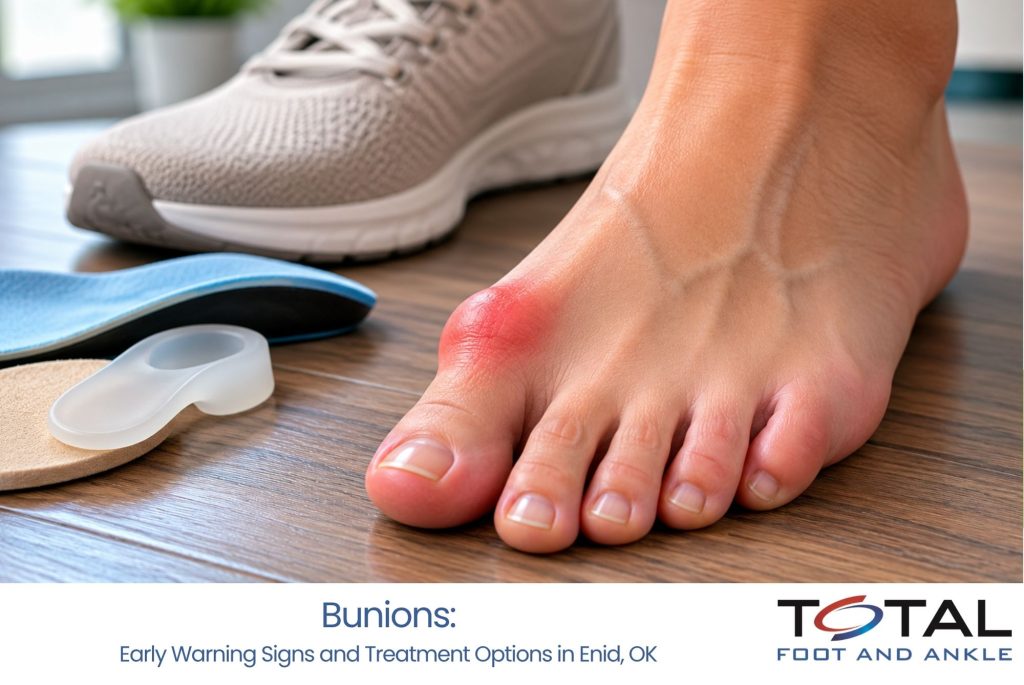
Understanding Bunions: Causes, Symptoms, and Treatment Options
Bunions are one of the most common foot conditions affecting adults of all ages. While many people assume bunions are simply a cosmetic issue, they can lead to significant pain, difficulty walking, and long-term foot problems if left untreated. At Total Foot and Ankle in Enid, OK, our experienced foot and ankle specialists help patients identify bunions early and explore the most effective treatment options to relieve discomfort and restore mobility.
If you’re experiencing pain near the base of your big toe or noticing changes in the shape of your foot, understanding the early warning signs of bunions can help you seek treatment before the condition worsens.
What Is a Bunion?
A bunion, medically known as hallux valgus, is a bony bump that forms at the joint where the big toe meets the foot. As the condition progresses, the big toe gradually shifts inward toward the second toe, causing the joint to protrude outward.
This misalignment places additional stress on the surrounding bones, ligaments, tendons, and soft tissues, often resulting in pain and inflammation.
What Causes Bunions?
Several factors can contribute to the development of bunions, including:
Genetics and Foot Structure
Many individuals inherit foot structures that make them more susceptible to bunions. If bunions run in your family, you may have a higher risk of developing them.
Improper Footwear
Shoes that are too tight, narrow, or have high heels can place excessive pressure on the front of the foot and contribute to bunion formation over time.
Arthritis
Inflammatory conditions such as rheumatoid arthritis can affect joint stability and increase the likelihood of bunions.
Foot Injuries
Previous injuries to the foot can alter foot mechanics and increase stress on the big toe joint.
Abnormal Foot Mechanics
Flat feet, overpronation, and other structural abnormalities may increase pressure on the big toe joint, accelerating bunion development.
Early Warning Signs of Bunions
Recognizing bunion symptoms early can help prevent worsening deformity and chronic pain.
Common warning signs include:
Visible Bump on the Side of the Foot
One of the earliest signs is a noticeable bump at the base of the big toe.
Big Toe Drifting Toward Other Toes
As the bunion progresses, the big toe may gradually lean inward toward the second toe.
Pain and Tenderness
Patients often experience aching, soreness, or tenderness around the big toe joint, especially after standing or walking.
Redness and Swelling
Inflammation surrounding the bunion may cause redness, warmth, and swelling.
Difficulty Wearing Shoes
Many patients find it increasingly difficult to wear certain shoes comfortably due to pressure over the bunion.
Corns and Calluses
Friction between overlapping toes can lead to painful corns and calluses.
Reduced Range of Motion
The big toe joint may become stiff, making it difficult to move the toe normally.
Why Early Treatment Matters
Ignoring bunion symptoms can lead to worsening deformity, chronic pain, joint damage, and difficulty participating in daily activities. As the bunion progresses, it may affect your balance, walking pattern, and overall foot health.
Seeking professional evaluation early allows for more conservative treatment options and may help delay or avoid surgery.
Conservative Treatment Options for Bunions
Many patients can successfully manage bunion symptoms without surgery, especially when treatment begins early.
Custom Orthotics
Custom orthotic devices can improve foot alignment, redistribute pressure, and reduce stress on the bunion joint.
Proper Footwear
Wearing shoes with:
- Wide toe boxes
- Good arch support
- Low heels
- Adequate cushioning
can help relieve pressure and improve comfort.
Padding and Bunion Shields
Protective pads can reduce friction and irritation caused by footwear.
Activity Modification
Reducing activities that aggravate symptoms may help decrease inflammation and pain.
Anti-Inflammatory Medications
Over-the-counter anti-inflammatory medications may help reduce swelling and discomfort.
Ice Therapy
Applying ice to the affected area can help manage inflammation after prolonged standing or activity.
Physical Therapy
Stretching and strengthening exercises may improve joint mobility and support healthy foot mechanics.
Splints and Toe Separators
In some cases, splints or toe spacers may help improve alignment and reduce discomfort.
When Is Bunion Surgery Recommended?
While conservative treatments can be highly effective, surgery may become necessary if:
- Pain significantly interferes with daily activities
- Conservative treatments no longer provide relief
- The bunion continues to worsen
- Toe deformity becomes severe
- Walking becomes difficult
- Joint damage develops
What Does Bunion Surgery Involve?
Bunion surgery, known as a bunionectomy, involves correcting the alignment of the bones, ligaments, and soft tissues surrounding the big toe joint.
The specific procedure recommended will depend on:
- Severity of the bunion
- Degree of deformity
- Joint condition
- Patient activity level
- Overall foot structure
Modern surgical techniques often provide excellent outcomes, reduced discomfort, and improved recovery times compared to older methods.
Benefits of Professional Bunion Treatment
Seeking care from a foot and ankle specialist can provide several benefits:
- Accurate diagnosis
- Personalized treatment plans
- Pain relief
- Improved mobility
- Prevention of further deformity
- Better long-term foot health
- Enhanced quality of life
Why Choose Total Foot and Ankle in Enid, OK?
At Total Foot and Ankle, we are dedicated to helping patients achieve lasting relief from foot and ankle conditions. Our experienced team provides comprehensive evaluations and customized treatment plans designed to address each patient’s unique needs.
Whether you’re experiencing early bunion symptoms or have been struggling with foot pain for years, we are committed to helping you find effective solutions that restore comfort and mobility.
Frequently Asked Questions About Bunions
Are bunions hereditary?
Yes. Genetics are one of the most common risk factors for bunion development. If a parent or close family member has bunions, your risk may be higher.
Can bunions go away on their own?
No. Bunions do not disappear without treatment. However, conservative treatments can help manage symptoms and slow progression.
What shoes are best for bunions?
Shoes with a wide toe box, supportive arch structure, low heel, and ample cushioning are generally recommended.
Are bunions always painful?
Not always. Some individuals have bunions without significant pain, while others experience severe discomfort even with smaller bunions.
Can exercise help bunions?
Certain stretching and strengthening exercises may improve flexibility and reduce discomfort, but they typically do not reverse the deformity.
When should I see a podiatrist for a bunion?
You should seek evaluation if you experience pain, swelling, difficulty wearing shoes, changes in toe alignment, or limitations in daily activities.
Do custom orthotics cure bunions?
Custom orthotics do not eliminate bunions but can help improve foot mechanics, reduce symptoms, and slow progression.
Is bunion surgery painful?
Modern surgical techniques and pain management protocols help minimize discomfort during recovery. Most patients experience significant improvement after healing.
How long does recovery take after bunion surgery?
Recovery varies depending on the procedure performed. Many patients return to normal activities within several weeks to a few months.
Can bunions come back after surgery?
While recurrence is possible, proper surgical correction and following post-operative recommendations significantly reduce the risk.
Schedule a Bunion Evaluation in Enid, OK
If you’re noticing early signs of a bunion or struggling with chronic foot pain, don’t wait for symptoms to worsen. Early intervention can make a significant difference in preserving foot health and avoiding future complications.
The team at Total Foot and Ankle is here to help you find the most effective treatment option for your needs and lifestyle.
Contact Information
Total Foot and Ankle
524 N Van Buren St
Enid, OK 73703
Phone: (580) 237-3338
Website: https://totalfootok.com